Sleep
How to keep a consistent bedtime as an adult

Start with the time you need to wake up, count back at least seven hours of sleep plus the 15 minutes or so it takes to fall asleep, and make that your bedtime every night, weekends included. Keeping weekend bedtimes within about an hour of your weeknights is what makes the schedule stick.
A steady bedtime does two jobs. It protects the seven or more hours most adults need, and it keeps your body clock on one schedule, so falling asleep and waking up both get easier.
Steps at a glance
- Fix your wake time. Choose the time you need to be up on most days and keep it seven days a week.
- Count back seven to nine hours. Subtract the sleep you need plus about 15 minutes to fall asleep. That is your bedtime.
- Set a wind-down reminder. Put an alarm 45 to 60 minutes before bedtime to start winding down.
- Keep weekends within an hour. Go to bed and get up within about an hour of your weekday times.
- Move in 15 minute steps. If your new bedtime is much earlier, shift it by 15 minutes every few nights.
Work backward from your wake time
Your wake time is usually the fixed point, set by work, school or children, so build your bedtime from it. If you wake at 6:30 and want eight hours, you need to be asleep by 10:30, which means being in bed around 10:15.
Guidance from sleep medicine groups is that adults need at least seven hours a night. If you regularly need an alarm to drag you out of deep sleep, your bedtime is probably too late.
Build a 30 to 60 minute wind-down routine
What you do in the hour before bed decides how easy the bedtime is to keep:
- Dim the lights and move screens out of reach, or at least out of bed.
- Keep the bedroom cool, dark and quiet.
- Stop caffeine in the early afternoon; it lasts longer than most people expect.
- Do the same short sequence each night, like a shower, a few pages of a book and a breathing exercise.
Try a slow breathing exercise in bed
Slow breathing with a long exhale is a gentle way to finish the day. Try three minutes of box breathing, or 4-7-8 breathing: in for four, hold for seven, out for eight. If your mind is racing, counting the breath gives it something simple to hold on to.
Track your bedtime in Wellnest
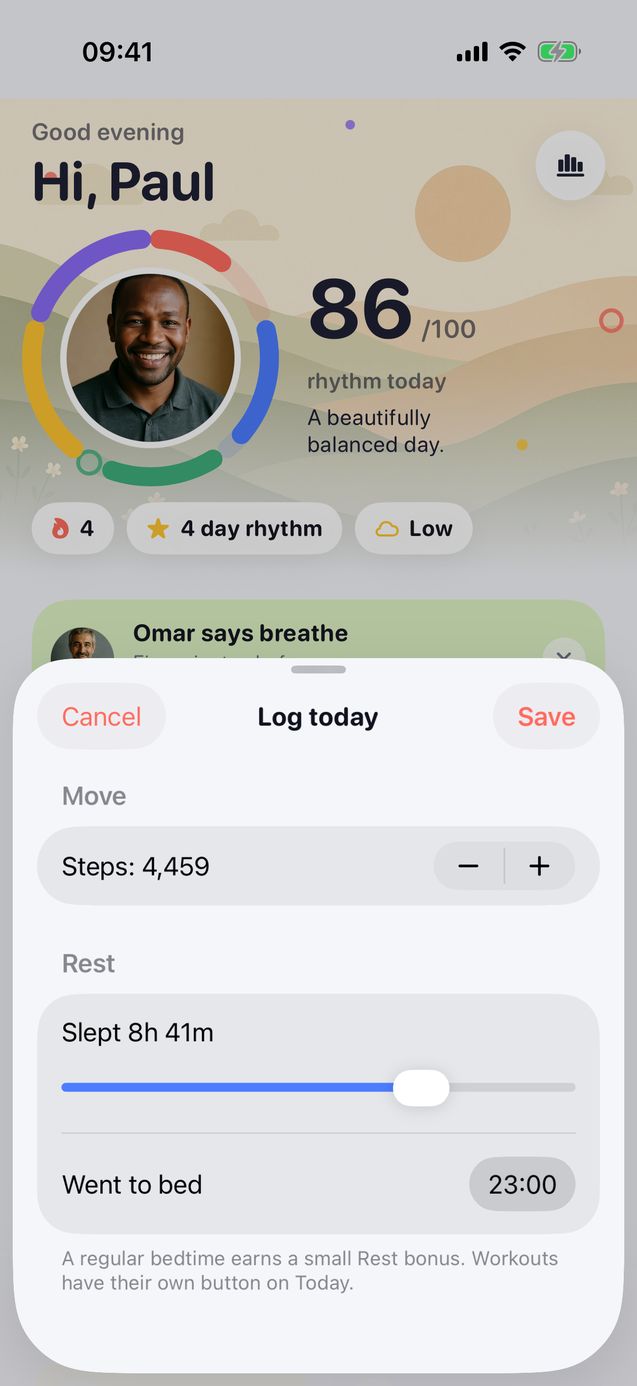
Wellnest reads your sleep and bedtime from Apple Health or Health Connect, or you can log them by hand in a few taps. When you go to bed within 45 minutes of your usual time over the last week, your Rest score gets a small bonus, so steadiness counts as much as hours.
Start an Early to bed week challenge with friends or family, and let them send you a “Go to bed” nudge when it is getting late.
When a consistent bedtime is not enough
If you have trouble falling or staying asleep at least three nights a week for three months, even with a steady routine, talk to a doctor. Insomnia is common and treatable, and the first recommended treatment is a structured program called CBT for insomnia rather than sleeping pills.
Questions
Does going to bed at the same time matter if I still get eight hours?
It helps. A regular schedule keeps your body clock steady, which usually makes it easier to fall asleep and wake up. Shifting your sleep window by several hours on some nights can feel like mild jet lag.
Is it bad to sleep in on weekends?
An occasional lie-in is fine. Try to keep weekend wake times within about an hour of weekdays. If you need long lie-ins to function, you are probably not getting enough sleep during the week.