Breathing
The physiological sigh: how to do it and when it helps

A physiological sigh is a double inhale followed by a long exhale. Breathe in through your nose, take a second, shorter sip of air on top without breathing out, then let it all go slowly through your mouth. One to three sighs is often enough to take the edge off a stressful moment.
You already sigh without thinking, every few minutes and more often when you are upset. Doing it on purpose turns it into something you can use anywhere, in about fifteen seconds.
Steps at a glance
- Breathe in through your nose. Take a full, comfortable breath in through your nose.
- Sip in a little more. Without breathing out, take a second short inhale through your nose to top up your lungs.
- Breathe out slowly through your mouth. Let the air out in one long, relaxed exhale that lasts longer than both inhales together.
- Repeat once or twice. Do one to three sighs, with a normal breath between them if you feel lightheaded.
Why a double inhale and a long exhale?
Researchers think the second sip helps reopen tiny air sacs in the lungs that partly close over time, so the long breath out that follows can empty the lungs more fully.
The exhale is the part that matters most for calm. Breathing out for longer than you breathe in slows your heart rate a little with each breath, and a slower, deeper rhythm is what people describe as feeling settled.
What the research says about cyclic sighing
In a 2023 Stanford study published in Cell Reports Medicine, 111 volunteers practiced one of three breathing exercises or mindfulness meditation for five minutes a day for a month. The group doing cyclic sighing, repeated physiological sighs, reported the biggest improvement in mood, and their breathing rate at rest came down.
It was one study, done remotely, with self-reported mood. That makes it a good reason to try the practice and see how it feels for you, and no guarantee that it works for everyone.
One physiological sigh or five minutes of cyclic sighing?
Both have a place, and they suit different moments:
- In the moment: one to three sighs when you notice your shoulders creeping up, before you reply to a stressful message, or in a queue.
- As a daily habit: five minutes of cyclic sighing, the dose used in the Stanford study, at a time you can protect, such as after lunch or before bed.
How to practice the physiological sigh in Wellnest
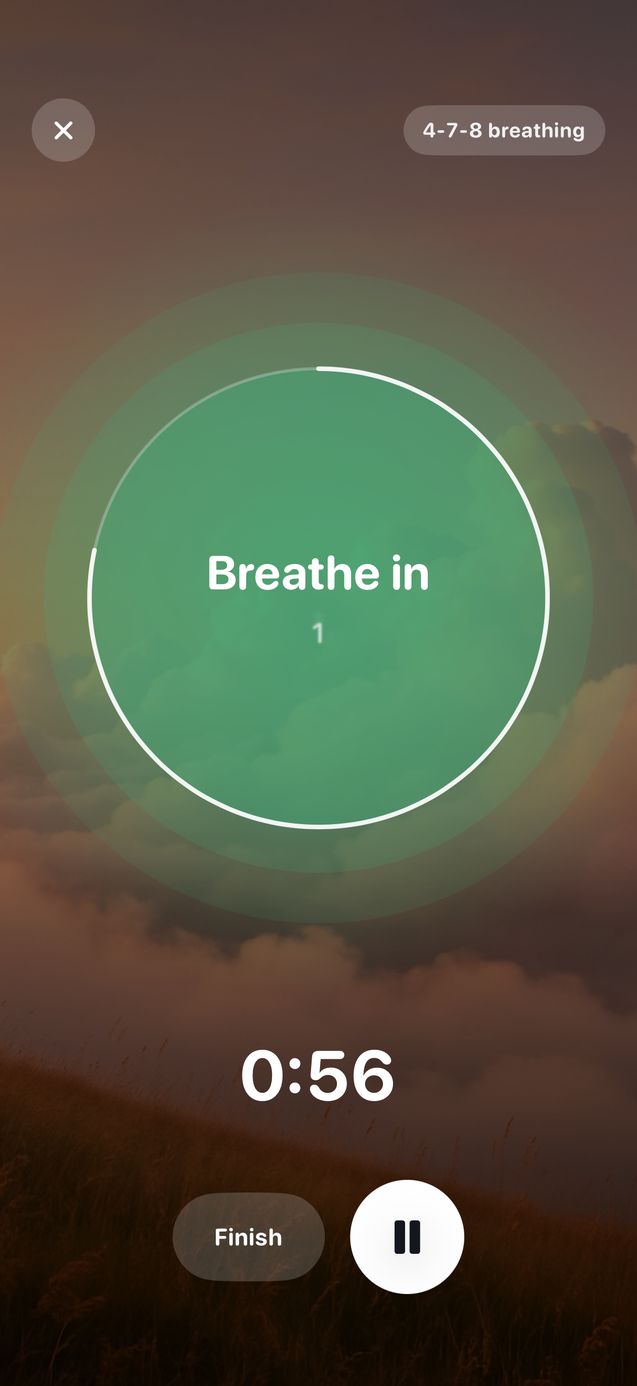
The Sigh pattern in the Mind tab paces it for you: two seconds to breathe in, one second to sip more air, and six seconds for the long breath out. The circle grows on the first breath, tops up on the sip and shrinks slowly on the exhale, with a light tap at each change.
Pick 1, 3 or 5 minutes. The minutes count toward your Mind arc like any other session. Sigh is part of Wellnest Plus.
Who should go gently
If you feel dizzy or tingly, stop and breathe normally. People with asthma, COPD or another lung condition should keep the inhales gentle and check with a doctor first. If you breathe fast when you panic, practice sighs while calm so the long exhale feels familiar when you need it.
Questions
How is a physiological sigh different from box breathing?
A sigh uses two inhales and a long exhale with no holds, and one to three of them can help in seconds. Box breathing uses four equal counts with holds and works best over a few minutes.
Can a physiological sigh help me fall asleep?
Some people find a few slow sighs in bed help them unwind. If the double inhale feels too energizing at night, try 4-7-8 breathing or box breathing instead.